

What’s Changed in Digital Marketing Trends for 2026?
Summarise this blog




Key Takeaways
The digital marketing trends shaping 2026 centre on AI reshaping search behaviour, the rise of answer engine optimisation (AEO) alongside traditional SEO, short-form video dominating content formats, first-party data becoming non-negotiable as privacy regulations tighten, micro-influencers delivering stronger ROI than celebrity partnerships, and marketing budgets facing sharper scrutiny with a push toward measurable outcomes. For Malaysian brands, nearly all internet users access the web via mobile, social commerce is accelerating through TikTok Shop and Meta Ads, and the brands seeing the best outcomes are those treating AI as a backend tool while keeping customer-facing content human and culturally relevant.
What a time to be in marketing. Every year, someone declares a trend “dead” and something else “the future.” The truth, as always, is messier. Some things are genuinely shifting, while others are just last year’s trends wearing a new label.
So what’s actually different about digital marketing trends in 2026? Quite a lot, it turns out. According to HubSpot’s 2026 State of Marketing report, over 60% of marketers believe marketing is experiencing its biggest disruption in 20 years, driven largely by AI. And in Malaysia, where mobile internet penetration is near-universal and social commerce is booming, the pace of change is even more pronounced.
Here are the key trends in digital marketing that are worth paying attention to this year.
Table of Contents
1. AI Search Is Rewriting the Rules of Visibility

This is the big one. AI isn’t just a marketing tool anymore, as it is changing how people find information.
HubSpot reports that 41% of marketers say updating their SEO approach for AI-driven search is a top priority. And according to Gartner, traditional search engine volume is predicted to drop 25% by 2026 as users shift to AI chatbots and virtual agents.
ChatGPT alone has surpassed over 900 million weekly active users as of February 2026, and about 60% of Google searches already end without a click. Showing up on page one isn’t enough anymore. You need to be the answer AI pulls from.
2. Answer Engine Optimisation (AEO) Has Arrived
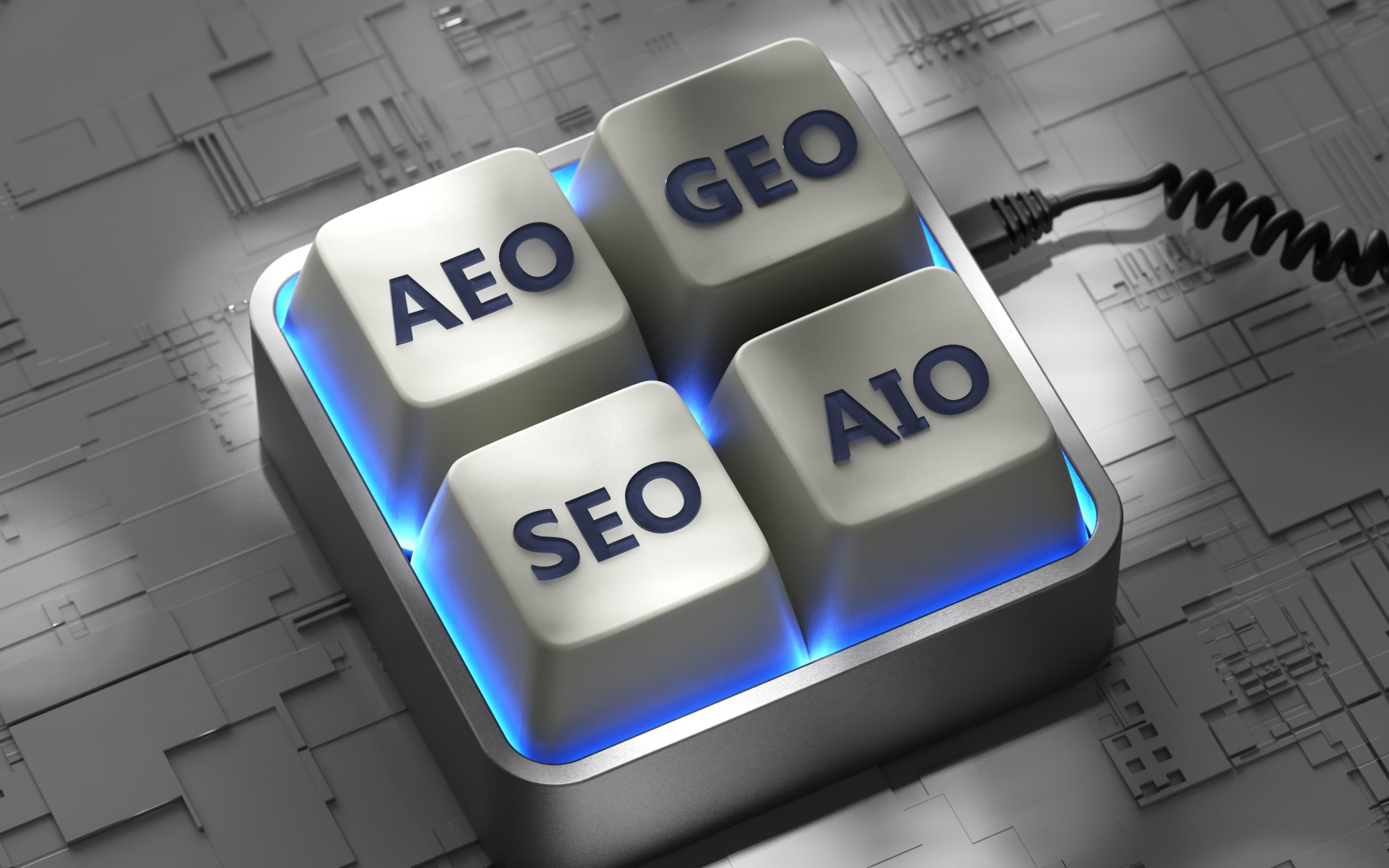
If you’re not yet familiar with AEO, you will be soon. It’s the practice of structuring content so AI platforms (ChatGPT, Perplexity, Google AI Overviews) can find, understand, and cite it as a direct answer.
Many marketers are already updating their SEO for generative AI, according to HubSpot. A BrightEdge study of 500,000 queries found that brands optimised for AI engines appear in 18% of relevant responses, compared to 3% for those that aren’t. That’s a 6x visibility gap.
Here’s what AEO looks like in practice:
- Structuring content around specific questions users actually ask
- Using schema markup so AI can extract answers cleanly
- Building topical authority through content clusters
- Keeping content fresh — AI favours recently updated sources
It’s not a replacement for SEO, but the next layer on top of it.
3. Short-Form Video Still Runs the Show
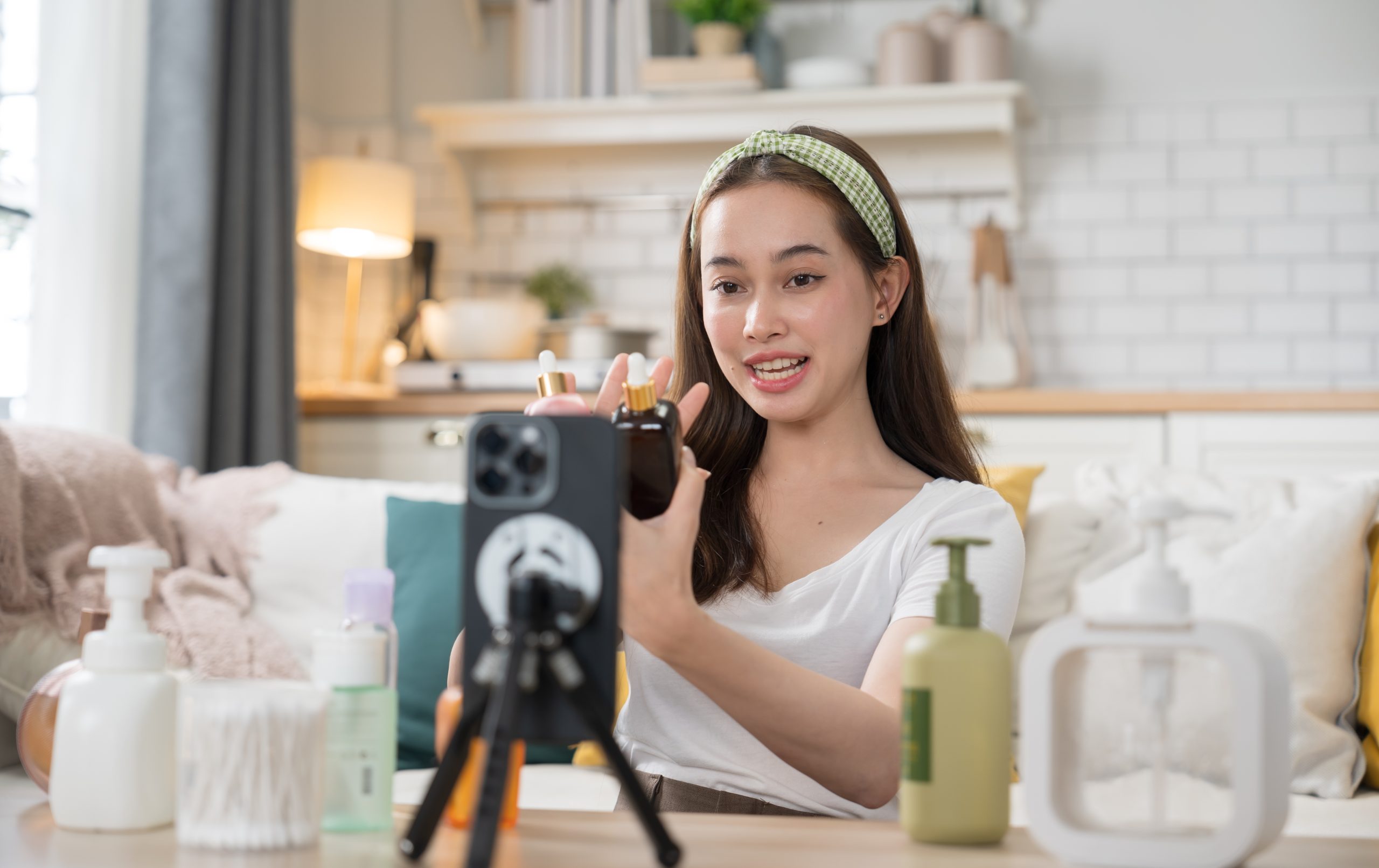
No surprise here, for the simple fact that video outperforms static by 50-70%. TikTok, Instagram Reels, and YouTube Shorts remain the dominant formats.
What’s shifted is the approach. One-off viral clips are less effective than they used to be. Brands seeing the best outcomes build serialised content, such as recurring segments, behind-the-scenes series, or episodic storytelling. Audiences stay longer when content gives them a reason to come back.
4. First-Party Data Is No Longer Optional
With third-party cookies phasing out and privacy regulations tightening across Southeast Asia, first-party data has become the foundation of effective targeting. Brands collecting data through their own channels, such as email sign-ups, loyalty programmes, on-site behaviour, and WhatsApp conversations, have a significant edge.
HubSpot reports that 26% of marketers cite email marketing as one of the most effective channels for segmentation and personalisation. The digital marketing trends for 2026 conversation keeps circling back to one point: the brands with the best first-party data win.
5. Micro-Influencers Over Big-Name Endorsements
Influencer marketing isn’t new. But the model is changing. According to HubSpot’s trends data, enterprise and SMB teams reported the most success with micro-influencers. The sweet spot for most Malaysian brands? Creators with 10,000–50,000 followers who produce authentic, niche content.
Performance-based structures are becoming standard too, where compensation ties into clicks, conversions, or brand awareness growth rather than flat fees. This makes influencer marketing less of a gamble and more of a trackable channel.
6. Marketing Budgets Face Sharper Scrutiny
Good news: HubSpot reports that nearly 80% of marketing teams expect at least a slight budget increase in 2026. The catch? 73% say their budget receives more scrutiny now than in the past.
Where is that money going? The top investment areas marketers cited include:
- AI chatbots and platforms (ChatGPT, Perplexity, Gemini, Claude)
- Short-form video production and distribution
- Answer engine optimisation and AI search visibility
- First-party data infrastructure and personalisation tools
The shift is clear: spending is moving toward measurable, AI-informed channels. Vanity metrics like social engagement (only 15% call it a top KPI) and email open rates (8.4%) are fading from priority lists.
7. SEO Isn’t Going Anywhere. It’s Evolving.
Despite all the talk of AI disruption, SEO remains foundational. Google still holds over 95% of Malaysia’s search market share. What’s changed is that SEO now has to work across multiple surfaces, comprising traditional SERPs, AI Overviews, social search, and voice.
The brands getting the best outcomes treat SEO, AEO, and social search as one integrated approach. If you’re working with an experienced SEO agency in Malaysia, this kind of cross-channel thinking should already be part of the conversation.
What This Means for Malaysian Brands
Malaysia’s digital market has its own dynamics. According to DataReportal, the country had 35.4 million internet users in late 2025, with nearly all access via mobile. Social media user identities reached 30.7 million, which is about 85% of the population.
For brands here, the digital marketing trends for 2026 carry specific implications:
- Social commerce through TikTok Shop and Meta Ads + WhatsApp funnels is a primary sales channel, rather than an experiment
- Content needs to be mobile-first, video-heavy, and culturally localised for festive moments like Hari Raya, CNY, and Deepavali
- AEO and AI search optimisation are becoming essential alongside traditional SEO
Working with the right digital marketing agencies that understand both global key trends in digital marketing and the Malaysian market is what separates brands that keep pace from those that fall behind.
Get Your Digital Marketing on the Right Track with Primal
Digital marketing is no static game, and the field and trends are always changing in ways quicker than you can keep pace with. If you want your brand visible on Google’s first page AND appearing in AI search, our team at Primal offers SEO capabilities combined with AI search services to cover every surface where your audience is looking.
As a leading SEO agency in Kuala Lumpur, we’ll help you plan approaches, analyse keywords, and develop content that matches what searchers and AI platforms are actually looking for. Our team focuses on measurable outcomes across Google Search, Google AI Overviews, and ChatGPT Search.
Ready to get started? Complete the form on our website, and our team will contact you with recommendations suited to your brand.
References:
- HubSpot – 2026 State of Marketing: Data from 1,500+ Global Marketers. Retrieved on 4 March 2026 from
https://blog.hubspot.com/marketing/hubspot-blog-marketing-industry-trends-report - HubSpot – 2026 Marketing Statistics, Trends & Data. Retrieved on 4 March 2026 from
https://www.hubspot.com/marketing-statistics - HubSpot – The Top 7 Marketing Trends of 2025 That We Expect to Continue in 2026. Retrieved on 4 March 2026 from
https://blog.hubspot.com/marketing/marketing-trends - Gartner – Future of Search / AI Adoption (via LLMrefs – Answer Engine Optimization: The Complete Guide for 2026). Retrieved on 4 March 2026 from
https://llmrefs.com/answer-engine-optimization - BrightEdge – AEO Visibility Study (via Kiwop – AEO in 2026: Optimize Your Brand for AI Answer Engines). Retrieved on 4 March 2026 from
https://www.kiwop.com/en/blog/aeo-optimize-brand-ai-answer-engines - DataReportal – Digital 2026: Malaysia. Retrieved on 4 March 2026 from
https://datareportal.com/reports/digital-2026-malaysia - Newnormz – 10 Key Digital Marketing Statistics Malaysia 2026. Retrieved on 4 March 2026 from
https://www.newnormz.com.my/digital-marketing-statistics-malaysia/ - HubSpot – Answer Engine Optimization Trends in 2026. Retrieved on 4 March 2026 from
https://blog.hubspot.com/marketing/answer-engine-optimization-trends - HubSpot – How Successful Marketing Teams Are Optimizing Performance in 2026. Retrieved on 4 March 2026 from https://blog.hubspot.com/marketing/optimizing-performance-metrics
Frequently Asked Questions About Key Trends in Digital Marketing for 2026
What is answer engine optimisation (AEO)?
AEO is the practice of structuring content so AI platforms like ChatGPT, Perplexity, and Google AI Overviews can extract and cite it as a direct answer. It builds on SEO fundamentals but focuses on being cited rather than just ranked.
Is SEO still relevant in 2026?
Yes. Google still holds over 95% of Malaysia’s search market share. SEO now works alongside AEO and social search as part of an integrated visibility approach.
How is AI changing digital marketing in Malaysia?
AI is used widely for content workflows, audience segmentation, and analytics. But Malaysian consumers favour authentic, human content over AI-generated material. The winning approach is AI behind the scenes, human on the front end.
Where should Malaysian brands invest their marketing budget in 2026?
Top investment areas include AI tools and platforms, short-form video, answer engine optimisation, first-party data infrastructure, and performance-based influencer partnerships.



Join the discussion - 0 Comment